
How to Source Compliant, Eco-Friendly Dyestuffs in 2026: The Complete Buyer's Guide for Textile, Leather & Paper Industries
Updated: May 6
The Buyer's Dilemma in 2026
If you are a sourcing manager at a textile mill in Bangladesh, a leather goods manufacturer in Italy, or a paper processor in Vietnam, you face a challenge that did not exist a decade ago: your buyers — fashion brands, retailers, and end consumers — now demand proof of sustainability alongside proof of quality.
OEKO-TEX Standard 100, GOTS (Global Organic Textile Standard), ZDHC (Zero Discharge of Hazardous Chemicals), and Bluesign certifications are no longer marketing differentiators. In 2026, they are baseline sourcing requirements. Brands that fail compliance audits lose contracts. Mills that use non-compliant dyes risk losing access to European and North American retail chains entirely.
Yet switching dyestuff suppliers is not a simple decision. Color consistency, fastness properties, batch-to-batch reliability, price, and lead time all matter — and a "sustainable" label means nothing if the dye bleeds after three washes.
At Avi Chemicals, a dyestuff manufacturer and exporter from Ahmedabad, India with over 40 years in the industry — we have seen this shift happen in real time. This guide answers the most common questions we receive from global buyers and helps you make the right decision for your production, your certification, and your customers.
What "Eco-Friendly Dyestuffs" Actually Means and What It Does Not
The phrase "eco-friendly dyes" is one of the most misused terms in the chemical supply chain. Before we discuss sourcing, let us be clear about what genuinely compliant dyestuffs look like.
What It Means:
Free of restricted substances listed under OEKO-TEX Standard 100 (Annex VI) — including heavy metals, formaldehyde, chlorinated carriers, and carcinogenic amines
Meets GOTS chemical input criteria: dyes must satisfy defined toxicological requirements and biodegradability thresholds
ZDHC MRSL (Manufacturing Restricted Substances List) compliant: zero discharge of 11 classes of hazardous chemicals
High fixation efficiency: a dye that fixes at 85–90% leaves less unfixed dye in wastewater, directly reducing effluent load
What It Does Not Mean:
"Natural" or plant based (natural dyes have scalability limitations and often inferior fastness)
Low cost always equals low impact (some cheap synthetic dyes have the worst environmental profiles)
A logo on a supplier's website without verifiable test reports
The practical test for buyers: Request a Safety Data Sheet (SDS), a REACH compliance declaration, and ideally third-party test data against the OEKO-TEX 100 restricted substance list before approving any new dyestuff supplier.
Understanding which dye class is correct for your substrate is the foundation of both quality and compliance. Using the wrong dye leads to poor fixation, higher chemical use, more rework, and more effluent; all of which worsen your sustainability metrics.
Best for: Cotton, viscose, linen, rayon, lyocell (Tencel)
Key properties: Covalent bond formation with the fiber, high wash fastness (typically Grade 4–5), bright shade development, excellent reproducibility
Reactive dyes account for nearly 37% of the global textile dyestuff market. The largest share of any dye class — because cotton and cellulosic blends dominate global apparel and home textile production.
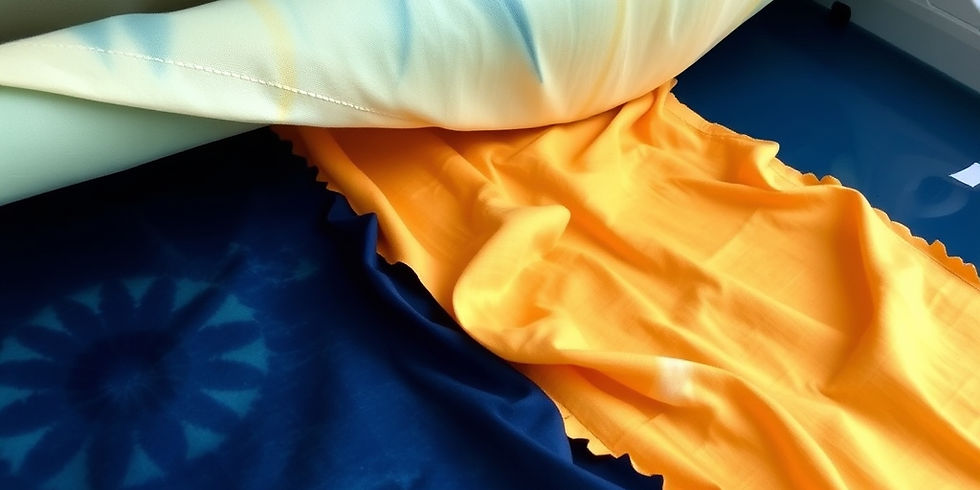
For compliance purposes, reactive dyes have an advantage: when properly fixed, the dye molecule becomes part of the fiber and reduces the risk of migration onto skin (a key OEKO-TEX concern). The challenge is fixation efficiency; unfixed dye must be thoroughly washed off, requiring significant water use. This is why choosing a reactive dye with a high exhaustion rate directly supports your wastewater management and compliance targets.
Avi Chemicals supplies: A broad range of reactive dyes in powder and liquid form, covering the full shade spectrum from Navy and Black to Turquoise and Bright Red — with documented fixation rates and wash fastness data available on request.
Best for: Wool, silk, nylon, leather
Key properties: Ionic bonding in an acidic bath, excellent levelling, vibrant shades, good light fastness in milling and metal-complex grades
Acid dyes are the primary colorant class for the leather industry and remain essential for dyeing nylon in sportswear and hosiery. The name refers to the acidic dyeing conditions; not to acidity in the finished product, which is important to communicate to compliance teams unfamiliar with dye chemistry.

For leather buyers specifically: selecting acid dyes with good rub fastness (dry and wet) is critical for finished goods entering European markets, where ISO 11640 rub fastness tests are standard. Poor rub fastness leads to staining of linings and garments which is a common cause of return claims.
Avi Chemicals supplies: Acid dyes for leather, wool, and nylon applications; with levelling acid, milling acid, and metal-complex (1:2) grades available depending on your fastness and processing requirements.
Best for: Cotton, paper, jute, regenerated cellulose
Key properties: No mordant required, simple application, good initial color yield, economical
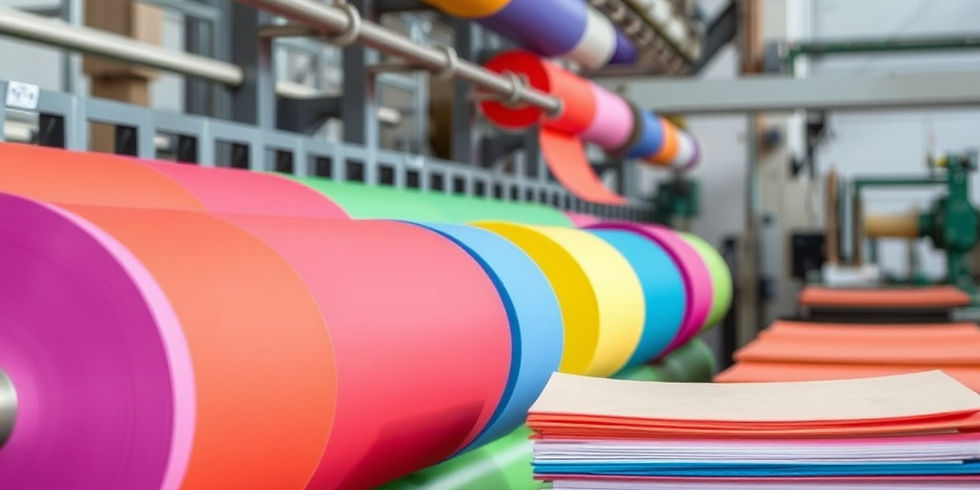
Direct dyes are the workhorse of the paper dyeing industry and remain relevant for cellulosic textiles where cost efficiency outweighs fastness requirements. For paper manufacturers in Italy, Spain, and Southeast Asia; segments Avi Chemicals actively supplies direct dyes offers consistent shade reproducibility in continuous dyeing processes.
The key quality parameter to specify: wash fastness grade and light fastness grade must be confirmed upfront, as these vary significantly across commercial direct dye ranges.
Avi Chemicals supplies: Direct dyes in powder and liquid form, with specific grades developed for paper, textile, and leather applications across a wide color gamut.
Based on the enquiries we receive from buyers across Italy, Spain, Bangladesh, Vietnam, Indonesia, Turkey, Morocco, Russia, Brazil, and the Philippines, these are the most frequently asked sourcing questions and what you should expect from any reputable dyestuff manufacturer.
1. "Can you supply dyes that meet OEKO-TEX Standard 100?"
Any credible dye manufacturer should be able to provide test reports or declarations confirming compliance with the OEKO-TEX 100 restricted substance list. Ask for documentation, not just a verbal assurance. Key substances to verify: absence of azo dyes that release carcinogenic amines (Annex VI), heavy metal content within limits, and absence of banned chlorinated phenols.
2. "What is the wash fastness and light fastness of your dyes?"
This is the most basic quality question and yet it is where many smaller suppliers fall short. Reputable manufacturers provide ISO-standard fastness data (ISO 105-C06 for wash fastness, ISO 105-B02 for light fastness) for each dye. At Avi Chemicals, our in-house testing laboratory performs these tests as a standard part of quality control before dispatch.
3. "Can you develop a custom shade to match our sample?"
Brand-to-brand color matching is one of the most common requests we receive, particularly from buyers in the fashion and footwear supply chain. This requires a well-equipped lab with spectrophotometric analysis capabilities and experienced colorists who understand inter-substrate metamerism. Our custom shade development service handles exactly this from lab dip submission to production sign-off.
4. "What is your minimum order quantity and lead time for export?"
For international buyers, this determines whether a supplier is commercially viable. Clearly defined MOQs, lead times, and export documentation (including MSDS, Certificate of Analysis, and Packing List) are non-negotiable for import clearance in most markets.
5. "Do you have experience supplying to [Bangladesh / Philippines / Vietnam / Italy / Turkey]?"
Market-specific experience matters because dyestuff import regulations, preferred product grades, and customer quality expectations vary significantly by country.
Avi Chemicals exports regularly to all these markets and understands the practical documentation and compliance requirements for each.
The Sustainability Shift: What Textile and Leather Buyers Must Prepare For
The global textile industry is experiencing its most significant regulatory shift in decades. Here is what is driving it and what it means for your dye sourcing strategy.
European Green Deal and Chemical Regulation
The EU's REACH regulation and the forthcoming EU Strategy for Sustainable and Circular Textiles are tightening restrictions on chemical inputs in textiles sold into European markets. Brands selling into the EU are already passing these compliance requirements down to their Tier 2 and Tier 3 suppliers including dye mills and chemical suppliers in India, Bangladesh, and Vietnam.
Implication for buyers: If you supply European fashion brands, your dyestuff supplier must be able to demonstrate compliance with REACH SVHCs (Substances of Very High Concern). Ask your supplier for a REACH declaration.
ZDHC and Brand Supply Chain Audits
Major brands including H&M, Inditex (Zara), Nike, and Adidas require their supply chains to comply with the ZDHC Manufacturing Restricted Substances List. Tier 1 and Tier 2 mills are increasingly being audited against this list and non-compliant chemical inputs (including dyes) result in corrective action requests or delisting.
Implication for buyers: Dye procurement decisions are no longer just a quality or cost decision. They directly affect your brand relationships and audit outcomes.
Rising Demand for High-Fixation Dyes
Driven by water scarcity and effluent treatment cost, textile mills in water-stressed regions (including India, Bangladesh, and Morocco) are actively seeking reactive dyes with higher fixation rates; reducing both water consumption for washing off and the chemical oxygen demand (COD) load on effluent treatment plants.
This is an area where dye chemistry innovation directly supports environmental targets. Ask your reactive dye supplier specifically about exhaustion and fixation efficiency data and not just shade quality.
Why Buyers from 20+ Countries Choose Avi Chemicals

Founded in 1980 and based in Ahmedabad, Gujarat — India's textile chemical capital — Avi Chemicals has spent over four decades building a reputation on three fundamentals: consistent quality, technical support, and reliable supply.
Here is what that means in practice for international buyers:
Manufacturing and Quality Control: Our factory at GIDC Vatva, Ahmedabad operates with an in-house testing laboratory conducting systematic quality checks on every batch including shade matching, fastness testing, and solubility verification. No batch leaves our facility without a Certificate of Analysis.
Custom Shade Development: We work with buyers from initial shade brief through to production scale sign-off. Our colorists are experienced across reactive, acid, and direct dye applications on multiple substrates. Turnaround time for lab dips is communicated clearly at enquiry stage.
Export Experience Across Diverse Markets: We regularly ship to Italy, Spain, Bangladesh, Vietnam, Indonesia, Thailand, Turkey, Russia, Brazil, Morocco, and the Philippines with full export documentation including MSDS, packing declarations, and HS code classification support.
Technical Support: Unlike distributors or trading houses, we manufacture what we sell. This means our technical team can answer process-specific questions; dyeing temperatures, electrolyte concentrations, pH control, after-treatment recommendations — not just product specifications.
Quick Reference: Dye Selection Guide for Buyers
Substrate | Recommended Dye Class | Key Quality Parameters |
Cotton / Viscose / Lyocell | Fixation %, Wash Fastness (ISO 105-C06), Shade Reproducibility | |
Wool / Silk | Levelness, Light Fastness (ISO 105-B02) | |
Nylon / Polyamide | Rub Fastness, Wash Fastness | |
Leather | Rub Fastness (ISO 11640), Penetration, Levelness | |
Paper | Shade Consistency, Solubility, Bleed Resistance | |
Cotton (economy grade) | Wash Fastness (Grade 3+), Light Fastness |
Conclusion: Making the Right Sourcing Decision
The dyestuff market in 2026 rewards buyers who ask the right questions; not just "what is the price per kg?" but "what is the fixation rate?", "do you have REACH compliance documentation?", and "can your technical team support our process development?"
Sustainability compliance is not a cost but it is an investment in your brand relationships, your audit outcomes, and your access to premium global markets.
At Avi Chemicals, we believe that quality and sustainability are not opposites. The right dye, properly applied, delivers better color, better fastness, and less environmental impact simultaneously.
Ready to Source? Get in Touch with Avi Chemicals
Whether you need a standard reactive dye range, a custom shade matched to your sample, or technical advice on switching to a compliant dyestuff, our team is ready to help.
Contact us today:
📞 +91 88660 13200 | +91 88660 16200
📍 C-1/341, Phase II G.I.D.C., Vatva, Ahmedabad, Gujarat - 382445
Request a sample, get a quote, or send us your shade card — we respond within 24 hours.
Avi Chemicals — Leading Dyestuff Manufacturer & Exporter from India since 1980. Reactive Dyes | Acid Dyes | Direct Dyes | Custom Shade Development | Export to 20+ Countries.


good information.. thanks for sharing
Nice content.. would like to inquire for Reactive Black 5.
Thanks for sharing
Very informative