
How to Import Dyes from India to Indonesia: A Practical Guide for Traders and Mills
By Dhruv Garg, Director, Avi Chemicals | Updated 2 October 2026
To import dyes from India to Indonesia without surprises, qualify the manufacturer before you compare prices. Ask for a batch-specific CoA, TDS and MSDS, test a free sample in your own lab, run a small trial lot, and agree payment terms in writing. At Avi Chemicals, orders start at 50 kgs.
Supplier snapshot: Avi Chemicals, Vatva GIDC, Ahmedabad
Minimum order | 50 kg |
Free sample | 100 gms |
Monthly capacity | More than 200 MT across the range |
Dispatch from stock | Generally 4 to 5 days, depending on the product |
Payment | 45-day L/C |
Packing | 25 kg boxes |
Ports | Your choice, including Jakarta and Surabaya |
Documents | CoA, TDS and MSDS on request. ISO 9001 |
Range |
Most first orders from a new dye supplier go wrong the same way. The price per kilo looked right, the sample matched, and then the second batch came in weaker or a shade off. This guide covers what we'd check if we were the buyer. It's written from the supplier's side of the table, so where we can, we've put our own numbers on the page for you to hold us to.
Want a quote or a sample now? Send the dye class or product name, quantity and destination port.
Pick the dye class by fibre, not by catalogue
Fix the dye class before you compare suppliers. The fibre and the process decide it, and no discount fixes a wrong class.
Dye class | Indonesian trade term | Main fibres | Typical use | What to watch |
zat warna reaktif | Cotton, viscose, other cellulosics | Knit and woven dyeing, printing | Strength, fixation, shade at your liquor ratio | |
zat warna direk | Cotton, viscose | Cost-sensitive shades on cellulose | Wash fastness often needs after-treatment | |
zat warna asam | Wool, silk, nylon | Levelling shades on protein and polyamide | pH control, levelling | |
Pigment powder and paste | pigmen tekstil, pasta pigmen | Most fibres, with a binder | Printing and pad application | Binder compatibility, rub fastness |
Our range for Indonesian buyers
We make four lines. Each product page lists the C.I. name, so you can search by it:
Reactive dyes (Colactive) for cotton and other cellulosic fibres
Direct dyes (Colrect) for cost-sensitive cellulosic shades
Acid dyes (Colacid) for wool, silk and nylon
Pigment powders and pastes for printing and pad application
Can't find your shade? Send the C.I. name or a swatch and we'll tell you if we make it.
Why the price per kilo misleads
Two products sold under the same name can differ in strength. A weaker dye needs more kilos to reach the same depth, so the cheaper kilo can be the dearer dye. Divide price by relative strength before you compare.
Illustrative numbers only: Dye A at 100 per kg and 100% strength costs 100 per unit of colour. Dye B at 90 per kg and 80% strength costs 112.5. Ask every supplier what strength the product is sold at, and whether that standard is fixed or moves from lot to lot.

Batch consistency, and what we check
Batch-to-batch variation usually comes from three places: how the dye is standardised with diluents, moisture content, and the quality of the intermediates going in. A supplier who can't explain how they hold a standard probably isn't holding one.
At Avi Chemicals, every batch is checked against its quality parameters, shade and strength included, before it's dispatched. Whoever you buy from, ask whether they keep a retained sample of each batch. When a complaint arrives three months later, a physical reference settles the argument faster than any report.
Capacity: what happens after the trial
A good trial means little if the supplier can't repeat it at volume. Our monthly capacity is more than 200 MT across the range, so a 50 kgs trial can grow into regular lots without you changing source. Tell us your expected monthly volume at the start and we'll say honestly whether it fits.
Documents to ask for
CoA (Certificate of Analysis): batch-specific, with the batch number and test results against the standard. Check that the batch number on the CoA matches the one printed on the box.
TDS (Technical Data Sheet): product-level application, solubility and fastness information. It describes the product, not your lot.
MSDS: handling, storage, hazards and transport. Your forwarder and customs broker will ask for it.
We hold ISO 9001 and issue all three on request. ISO 9001 certifies a quality system, not a single dye lot, which is why the CoA matters more day to day.
If paying a new supplier worries you
It should. Here's how we reduce the risk on your side:
The 100 g sample is free, so no money moves before you've tested the dye.
CoA, TDS and MSDS are available before you place an order.
If you'd rather not pay in advance, we offer a 45-day L/C through your bank.
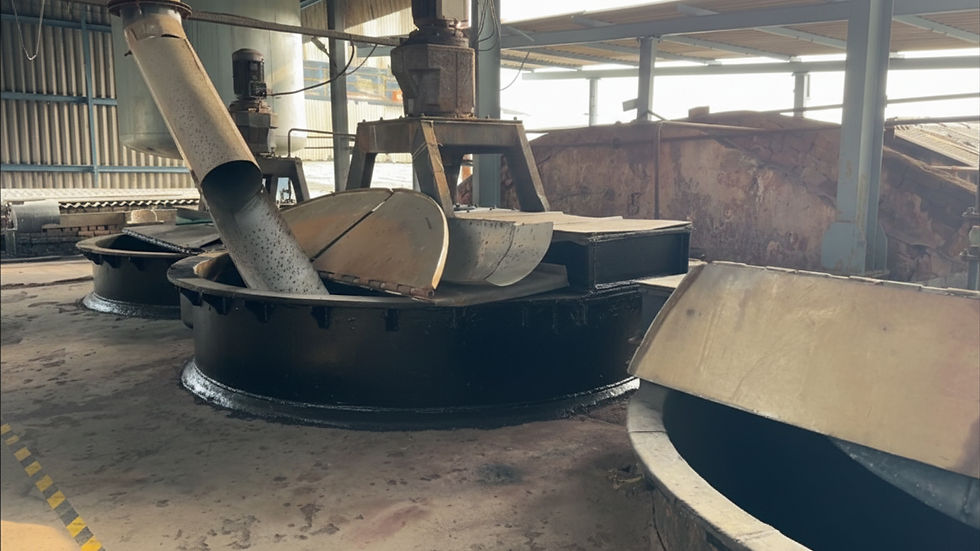
We hold ISO 9001, and the photos on this page show our plant area as they are.
Start small: sampling and the first order
Request the free 100 g sample, plus the CoA, TDS and MSDS for that product.
Run a lab dip on your own fabric, with your own water and recipe. A result from the supplier's lab only tells you about the supplier's lab.
Compare against your approved standard and record the result.
Place a trial order from 50 kg. Orders up to 1 MT on a 45-day L/C if you prefer. Bank charges weigh more on a small lot, so compare both options.
Check the delivered lot against the sample and the CoA.
Move to regular orders. Above 1 MT, payment is by L/C.
Stock items generally leave in about 4 to 5 days, depending on the product.
L/C: where the delays come from
A 45-day L/C gives you time to receive and check the goods before payment falls due. Delays on a letter of credit rarely come from the bank. They come from document discrepancies, where the goods description, quantity, packing, port names or HS code on the invoice differ from the credit by a single word.
Agree the document list before the L/C is opened. Check the draft line by line against the proforma invoice, and leave some room on shipment and expiry dates. An amendment costs time and bank fees, so catch the error at the draft stage..
Shipping to Jakarta and Surabaya, and how we pack
Goods go in 25 kg boxes. We ship to the port that suits you. For mills in Jakarta, Bandung and the wider Java region, that's usually Jakarta (Tanjung Priok) or Surabaya (Tanjung Perak). Sailing schedules shift, so ask your forwarder for the current schedule instead of trusting a number in a blog, this one included.
On terms, FOB lets you choose your own forwarder and keep control of freight. CIF puts freight and insurance on the seller. For smaller lots, compare LCL against FCL before you decide. Our guide to FCL vs LCL for dye traders walks through the economics.

How to evaluate a pemasok zat warna tekstil (textile dye supplier)
Use this checklist on every supplier on your shortlist, including us:
Is it a manufacturer or a trader? Ask for the factory address.
Is the strength standard stated, and does it stay fixed between lots?
Does every shipment come with a batch-specific CoA whose number matches the box?
Are the TDS and MSDS available before you order?
Is there a free or low-cost sample before you commit?
Is there a small first-order option, and are its payment terms clear?
Can they show capacity for repeat orders?
Are L/C documents, packing and port arrangements agreed on paper?
Who we supply
Avi Chemicals has made dyestuffs at Vatva GIDC, Ahmedabad, since 1980. We're a reactive dye manufacturer in India that also makes acid, direct and pigment lines, and we work as a bulk dye supplier to traders, agents and larger buyers, not end users. We already supply customers in Jakarta, Bandung and the wider Java region.
If you buy zat warna asam or zat warna direk alongside reactive, one supplier covering the range keeps your documents and quality checks in one place. That's worth something when you're managing impor zat warna dari India across several product lines.
Ready to import dyes from India to Indonesia?
Send the dye class or product name, quantity and destination port. If you can, add your rough monthly volume. We'll reply with a quote within 10 days, depending on market conditions, since dye prices move with the market, and we'll arrange your free 100 g sample.
Frequently asked questions
Q. What is your minimum order, and do you give free samples?
A. Our minimum order is 50 kgs, and we send a free 100 g sample first. Ask for the CoA, TDS and MSDS for that product at the same time, then run a lab dip on your own fabric, water and recipe before you place the trial order.
Q. What payment terms do you work on?
A. Orders up to 1 MT, including trial lots, are paid in advance. If you'd rather not pay ahead, we offer a 45-day L/C. Orders above 1 MT go on L/C. Agree the document list before the credit is opened and check the draft against the proforma invoice line by line, because most delays come from small mismatches.
Q. What is your monthly production capacity?
A. Our monthly capacity is more than 200 MT across the dye and pigment range, which supports repeat orders after a trial. Tell us your dye class and expected monthly volume, and we'll confirm availability and a realistic plan for the first shipments.
Q. How long does dispatch take?
A. Stock items generally leave in about 4 to 5 days, though it varies by product and order. Sea transit to Jakarta or Surabaya depends on the sailing schedule, so confirm the current schedule with your forwarder before you plan production.
Q. Which documents come with the dyes?
A. We issue a CoA, TDS and MSDS on request, and we hold ISO 9001. The CoA is batch-specific, so check that its batch number matches the number printed on your boxes when the goods arrive. The TDS and MSDS describe the product, not the lot.
Q. Should I ask for an azo or restricted-amine test report?
A. Yes, ask every supplier, including us, for a restricted-amine test report covering the exact product and batch you plan to buy. This matters most if your fabric goes to garment buyers who test finished goods, such as baby and children's clothing.
Q. Which dye class suits cotton?
A. Reactive dyes (zat warna reaktif) are the usual choice for cotton and other cellulosic fibres where wash fastness matters. Direct dyes (zat warna direk) suit cost-sensitive shades on cellulose but often need after-treatment for wash fastness. Acid dyes (zat warna asam) are for wool, silk and nylon.
Q. How do I get a quote?
A. Send the dye class or product name, quantity and destination port through our contact page or WhatsApp. Add your approximate monthly volume as well, since it helps us suggest the right pack size and shipment plan. We reply with a quote within 10 days, depending on market conditions, and arrange your free sample.


Comments