
Acid Red 131 (Acid Red 3BN) Dye: Specifications, Uses, Dyeing Guide and Bulk Supply from India
By Dhruv Garg, Director, Avi Chemicals | Updated 8 November 2026
Acid Red 131 (C.I. Acid Red 131, also sold as Acid Red 3BN and Acid Milling Red 3BN) is a bluish red weak acid dye used to colour wool, silk, nylon and leather. It is a single azo dye, soluble in water, applied in a weakly acidic to near neutral bath. Avi Chemicals makes it in Ahmedabad, India, and ships it in bulk from 50 kg.
This page is written for traders, agents and buyers. It covers what you need to compare offers: identity, names, dyeing behaviour, quality checks, compliance questions and bulk terms.

Acid Red 131 quick facts
Items | Detail |
C.I. name | Acid Red 131 |
Common trade names | Acid Red 3BN, Acid Milling Red 3BN, Acid Brilliant Red 3BN, Weak Acid Pink 3BN |
CAS number | 12234-99-0 |
Second CAS in circulation | 70210-37-6 |
Molecular formula and weight | C30H21N3Na2O9S2, about 677.6 g/mol |
Dye class | Weak acid (milling) dye, single azo |
Shade | Bluish red to pink |
Form | Powder, soluble in water |
Fibres | Wool, silk, nylon, leather |
Other reported uses | Paper and ink-jet inks |
HS code for acid dyes | 320412 |
Strength and shade standard | Stated on the CoA and TDS supplied with each lot |
Packing | 25 kg boxes |
Minimum order | 50 kg |
Names buyers use for Acid Red 131
Many makers sell this dye under their own trade name, so one dye shows up under many names in enquiries and price lists. The names below appear in supplier catalogues for C.I. Acid Red 131:
Common names: Acid Red 3BN, Acid Milling Red 3BN, Acid Brilliant Red 3BN, Weak Acid Pink 3BN, Acid Red BN, Dynacid Red 3BN
The brand names belong to their owners and are listed only to help you match an enquiry. A name is not a specification: two products sold under the same name can differ in strength and shade. Always write the C.I. name and the CAS number next to the trade name in your purchase order.
Chemistry in plain words
Public chemical databases give the name disodium 5-benzamido-4-hydroxy-3-[[2-(2-methylphenoxy)phenyl]diazenyl]naphthalene-2,7-disulfonate. Read simply: one azo group joins a substituted aniline to a naphthalene disulfonic acid that carries a benzamido group. The two sulfonate groups make the dye water soluble and give it the negative charge that bonds to wool and nylon. The molecule is large for an acid dye and has only two sulfonate groups, which is what places it with the weak acid or milling dyes.
What Acid Red 131 is used for
Wool and silk: yarn, fabric and knitwear dyed in an acid bath.
Nylon (polyamide): a common home for milling reds.
Leather: dyeing and shading.
Paper and inks: some suppliers list it for paper, and it appears in ink-jet ink patents.
It does not dye cotton or other cellulosic fibres. Acid dyes bond with the amino groups in protein and polyamide fibres. For cotton, your customer needs reactive dyes or direct dyes.
How to dye with Acid Red 131
These are usual starting points for milling acid dyes. They do not replace a lab trial, and the TDS supplied with your lot takes priority.
Parameter | Wool | Nylon | Silk |
Dye bath pH | 5.0 to 6.5 | 5.0 to 6.5 | 5.0 to 6.0 |
Start temperature | 40 °C | 40 °C | 40 °C |
Rate of rise | 1 to 1.5 °C per minute | 1 to 1.5 °C per minute | 1 °C per minute |
Final temperature | 98 to 100 °C | 95 to 98 °C | 85 to 90 °C |
Hold time | 45 to 60 minutes | 45 to 60 minutes | 45 to 60 minutes |
Liquor ratio | 1:10 to 1:20 | 1:10 to 1:20 | 1:10 to 1:20 |
Auxiliaries | Levelling agent, acetic acid or ammonium acetate | Levelling agent, acetic acid | Levelling agent, acetic acid |
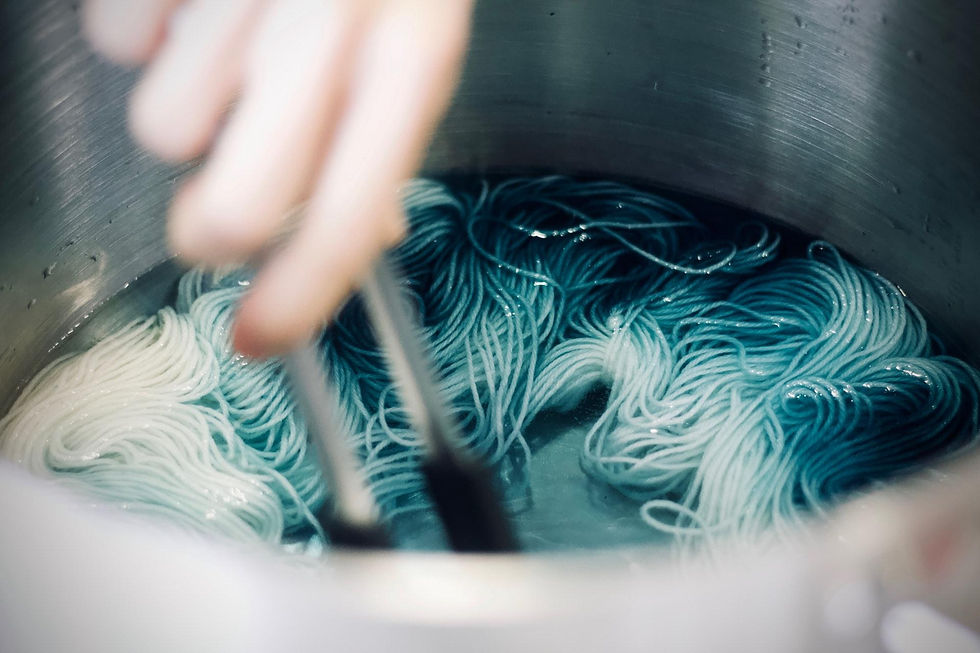
Set the bath with the levelling agent and the acid or buffer, add the pre-dissolved dye, then raise the temperature slowly. Hold at the final temperature for the full time. Cool slowly before rinsing. On nylon, many dyers finish with a syntan after-treatment to lift wet fastness.

Milling dyes trade some levelling for better wash fastness, so the heating rate and the bath pH matter more than they do with strong acid dyes.
Common problems and fixes
Problem | Likely cause | Fix |
Streaky or uneven shade | Temperature raised too fast, too little levelling agent | Slow the rise between 60 °C and 85 °C, add levelling agent, check liquor circulation |
Shade differs between lots | Strength or shade varies between lots, or bath pH differs | Run a lab dip on every lot against the standard, buffer the pH |
Weak wash fastness | Dye not fully fixed | Hold the full time at the final temperature, rinse well, add a syntan after-treatment on nylon |
Staining on white yarn | Unfixed dye bleeding in the wash | Same fixes as above, then test again |
Shade drift in hard water | Calcium and magnesium in the water | Use softened water or a sequestering agent |
Many complaints about milling reds trace back to bath pH and heating rate, not to the dye lot. Check both before you reject a lot.
Fastness and performance
Light fastness is graded 1 to 8. Wash, perspiration and rubbing fastness are graded 1 to 5. Higher is better. Published figures for Acid Red 131 differ between suppliers because strength, depth of shade, substrate and test method differ. Ask any supplier for a test report on the exact grade you will receive, and run the same tests on your own substrate. These are the four standard tests to ask for:
Test | Method | What it shows |
Light fastness | ISO 105 B02 | How well the colour resists fading in light |
Washing fastness | ISO 105 C06 | How well the colour survives repeated washing |
Perspiration fastness | ISO 105 E04 | How well the colour holds against sweat |
Rubbing fastness | ISO 105 X12 | How much colour transfers when the fabric is rubbed |
Quality checks before you buy
Check | How to do it | What to ask the supplier for |
Shade | Lab dip on your customer’s own substrate against your standard | Shade tolerance on the CoA |
Strength | Spectrophotometer reading against your standard | Strength as a percent of standard on the CoA |
Solubility | Dissolve a weighed amount in hot water and filter | Clear solution with no residue |
Moisture and insoluble matter | Standard laboratory methods | Both values on the CoA |
Batch consistency | Order a second lot and compare it with the first | The same tolerance on every lot |
Restricted substances | Test report for the lot | Aromatic amine and heavy metal results for the lot |
One rule on price: compare cost per unit of strength, not price per kg. If dye A is 100 percent strength at 10 per kg and dye B is 200 percent strength at 16 per kg, B costs 8 per unit of strength and A costs 10. Large price gaps between listings of the same C.I. name usually come from strength differences.
To see how we check every batch, read about our QC and testing laboratory.
Test our free sample in five steps
Weigh 1.0 g of our sample and 1.0 g of your current standard.
Dissolve each in 100 ml of hot water. Note how fast each dissolves and whether any residue stays on a filter.
Dye matching swatches of your customer’s wool or nylon with the same recipe and the same depth, for example 1 percent on weight of fibre.
Compare shade under daylight or a standard light source. Use a spectrophotometer if you have one.
Compare strength, then run a wash test on the dyed swatches.
Send us your results. If the shade or strength is off your standard, we will tell you what we can adjust.
Buying Acid Red 131 from Avi Chemicals
Minimum order: 50 kgs.
Free sample: 100 gms.
Packing: 25 kg boxes.
Lead time: ready stock, generally 4 to 5 days depending on product quality and order.
Quality: every parameter is checked for every batch and dispatch.
Documents: CoA, TDS and MSDS on request.
Payment: advance for trial orders. Orders above 1 MT can move to L/C, and a 45-day L/C is available where a buyer has concerns about advance payment.
Shipping: port is flexible, as per the buyer’s convenience.
Capacity: more than 200 MT per month across our range. We export to 12+ countries, including Bangladesh, Vietnam, China, Taiwan, South Korea, Italy, Turkey, Morocco and Indonesia.
To get a fast quote, send us: destination port, quantity, the fibre or process your customer uses, a sample or shade standard, packing needs and your preferred payment term.
Compliance and documents
EU rules (REACH Annex XVII, entry 43) restrict azo dyes that can release listed aromatic amines in textile and leather goods, and other markets follow similar limits. Importers often ask for restricted amine and heavy metal results on the lot. Ask any supplier for them. Tell us your destination market and its requirements when you ask for a quote, and we will confirm which documents we can supply. Check the rules of your customer’s destination market before you order.
Storage and effluent
Store the dye in sealed boxes in a cool, dry place and follow the MSDS for handling.
Azo dyes resist biodegradation, so dye house effluent needs treatment. Researchers have studied colour removal from effluent that contains Acid Red 131, for example by electrochemical treatment (Khandegar and Saroha, 2014). Good control of pH and temperature in the dye bath also leaves less colour in the spent bath. Dyers should follow their local discharge rules.
Why traders source this dye from an Indian manufacturer
Many mills make Acid Red 131, so the dye is not scarce. What separates suppliers is strength consistency, shade match from lot to lot and how fast stock moves. A manufacturer with ready stock can ship in days, and one that checks every batch can match your repeat order to your first lot. Ask for a sample and a CoA and judge us on the lot, not on the brochure.
Acid Red 131 FAQs
Q. What is Acid Red 131 used for?
A. Acid Red 131 is a bluish red weak acid dye used mainly to dye wool, silk, nylon and leather. Some suppliers also list it for paper and inks.
Q. What is the CAS number of Acid Red 131 (Acid Red 3BN)?
A. Trade suppliers list Acid Red 131 (Acid Red 3BN) under CAS 12234-99-0. Some research-chemical catalogues use CAS 70210-37-6 for the same name, so check the CAS on the supplier’s CoA and MSDS before you place an order.
Q. Is Acid Red 131 the same as Acid Red 3BN?
A. Yes. Acid Red 3BN, Acid Milling Red 3BN and Acid Brilliant Red 3BN are trade names for C.I. Acid Red 131. Always confirm with the C.I. name and CAS number.
Q. Is Acid Red 131 a milling dye?
A. Yes. Acid Red 131 is a weak acid dye, the group usually called milling dyes. It is applied in a weakly acidic to near neutral bath and gives better wash fastness than strong acid dyes, with harder levelling.
Q. What is your minimum order quantity?
A. Our minimum order quantity is 50 kgs, packed in 25 kg boxes.
Q. Do you give a free sample?
A. Yes, we send a free 100 gms sample so you can test shade, strength and solubility before you order.
Q. How do I test your free sample?
A. Dye matching swatches of your customer’s wool or nylon with our sample and your current standard, at the same depth and with the same recipe. Then compare shade, strength and wash fastness. The steps are on this page.
Q. What decides the price of Acid Red 131?
A. Mainly the strength and purity of the grade, raw material costs, order size and freight. Compare offers on cost per unit of colour strength, not only price per kgs.
Q. How fast can you ship, and what are your payment terms?
A. Ready stock ships generally in 4 to 5 days, depending on product and order. Trial orders are on advance payment, and orders above 1 MT can move to L/C, including a 45-day L/C where needed. The shipping port is flexible.
Q. Can Acid Red 131 dye cotton?
A. No. Acid dyes are for protein and polyamide fibres such as wool, silk and nylon. For cotton, use reactive or direct dyes.
Request a free 100 gms sample
Tell us your destination, the fibre your customer dyes and the quantity you plan to trade. We will send a free 100 gms sample of Acid Red 131 with the TDS so you can run your own lab dip. Request a sample or quote or see all our acid dyes. More guides are in our Dye Knowledge Center.
About Avi Chemicals. Avi Chemicals is a dyestuff manufacturer and exporter in Ahmedabad, India, established in 1980. We make reactive, acid and direct dyes and pigments and supply traders and agents in 12+ countries. About us. Our office is at 923 Shivalik Shilp, ISCON Crossroads, S.G. Highway, Ahmedabad, and our factory is at C-1/341, Phase II GIDC, Vatva, Ahmedabad. Email info@avichemicals.com or call +91 88660 13200.


Comments