
Acid Dyes vs Reactive Dyes: A Dyehouse Decision Guide for Every Fiber Type
Updated: May 6
You've just run a 200kg batch of nylon fabric through your reactive dye process. The shade looks acceptable in the dyehouse. Then the wash fastness report comes back at ISO Grade 2 — and your buyer in Spain rejects the entire lot.
This is not a hypothetical. It happens in mills across Bangladesh, Turkey, and Vietnam every season, and the root cause is almost always the same: a dye class mismatch that a correct pre-production decision would have prevented entirely. This guide exists for that decision moment — before the batch runs, not after.
Quick Summary — Key Takeaways
Reactive dyes form covalent bonds with cellulosic fibers (cotton, viscose); acid dyes cannot bond to cellulose and will wash out completely if applied to it.
Acid dyes require pH 3.5–5.5 and temperatures up to 95–98°C; reactive dyes work at pH 10.5–11 with temperatures from 25°C (cold-brand) to 80°C (hot-brand).
For nylon, both dye classes can work — your choice of acid vs reactive determines wash fastness grade, levelness, and your risk of barré effect.
Wash fastness ISO Grade 4–5 on cotton requires reactive dyes; achieving equivalent grades on wool requires either reactive dyes at higher cost or well-selected acid dyes with proper after-treatment.
Using the wrong dye class on the wrong fiber wastes 100% of your dye input — there is no partial result, only rejects or a blank substrate.
The Chemistry in Plain Dye house Language
Covalent Bonds vs Ionic Attraction — What This Means in Production
Reactive dyes form a covalent bond with the hydroxyl groups in cellulose. That bond is chemical — the dye molecule becomes part of the fiber structure. When your quality control team measures ISO wash fastness at Grade 4 or above on cotton, that result comes from this bond.
Acid dyes work differently. They attach to fiber through ionic attraction — the positively charged amino and amide groups in protein and polyamide fibers attract the negatively charged sulphonate groups in the dye molecule. This ionic bond is strong enough to deliver outstanding fastness on wool, silk, and nylon under the right conditions, but it requires the correct fiber chemistry to form at all. Cellulose has no amino groups. None. So if someone runs acid dyes on cotton expecting even a marginal result, they will exhaust the bath, consume the dye, and pull out a blank — or very nearly blank — fabric. Every gram of dye input lost.
Here is a production fact that only becomes obvious once you've seen an effluent report: because reactive dyes bond covalently and have a fixation rate of 70–90% (cold-brand) or 60–80% (hot-brand), 10–30% of unfixed dye goes straight into your effluent stream. That hydrolysed reactive dye requires activated carbon treatment or advanced oxidation to remove. Acid dyes, with exhaustion rates of 90–98% under correct conditions, produce significantly cleaner effluent — a real operational cost difference that rarely appears in dye comparison articles but matters enormously to mills facing discharge limits.
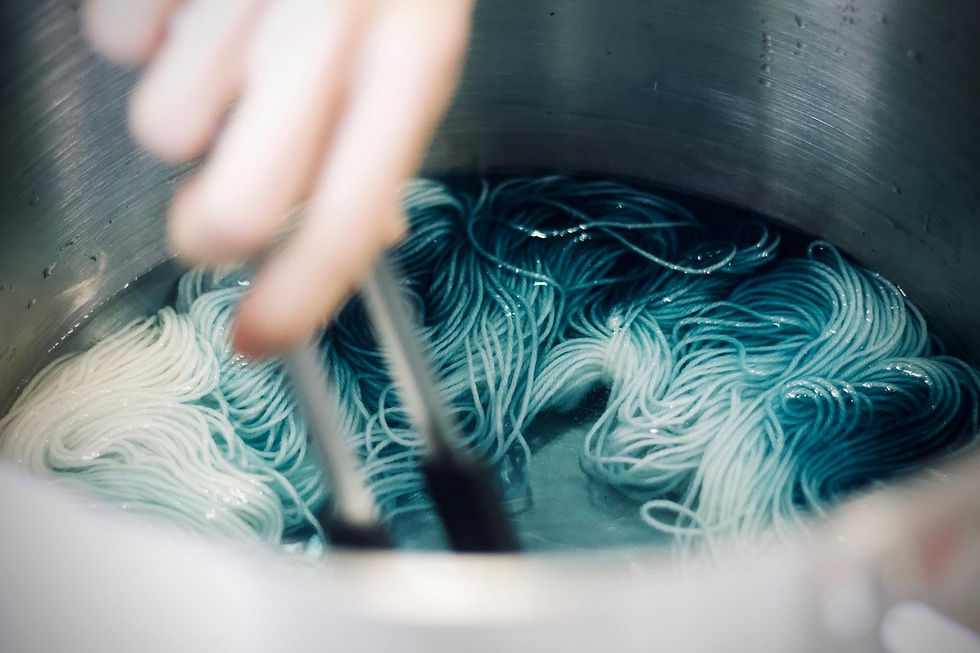
pH Parameters: The Non-Negotiable Process Variable
Reactive dyeing runs at pH 10.5–11, achieved with soda ash (sodium carbonate) at 10–20 g/L or, for deep shades and shorter fixation windows, caustic soda. That alkaline environment is what triggers the covalent bond formation. The alkalinity also means your machinery, pumps, and effluent neutralisation load are calibrated for base conditions.
Acid dyeing runs at pH 3.5–5.5. You achieve this with acetic acid (typically 1–3% owf) for wool and silk, and formic acid (0.5–2% owf) for nylon — formic acid drives faster and deeper penetration but requires more careful handling. That pH range keeps protein fiber in optimal ionic charge state for dye uptake.
What does this mean for auxiliary costs? Soda ash is cheaper per kilogram than acetic acid. But the volume of auxiliaries required and the effluent treatment costs generally offset this difference for most mill operations. If you're running both dye classes in the same dyehouse, you need separate pH management protocols, separate neutralisation chemistries, and separate machine wash-down sequences. Mills that overlook this run into cross-contamination issues on shared equipment — a well-documented source of shade variation and complaint lots.
Temperature: Energy Costs and Process Windows
Cold-brand reactive dyes — the majority of commercial reactive dyes for cotton — dye at 40–60°C. Hot-brand reactive dyes require 60–80°C, with longer fixation times. Either way, reactive dyeing on cotton is a lower-temperature process compared to protein fiber dyeing.
Acid dyeing on wool runs at 95–98°C — a full boil by most standards — for 45–60 minutes after the dye addition stage. Nylon processes at 85–90°C. For a Bangladesh dyeing unit processing cotton, this temperature differential means your boiler load for an equivalent batch weight is substantially higher when you transition to acid dye processes for protein fiber orders. Factor it in when costing.
Fiber Compatibility: The Rules That Have No Exceptions
Cotton. Viscose. Modal. Lyocell. Cupro. Every cellulosic fiber dyes with reactive dyes. The chemistry is non-negotiable — these fibers carry hydroxyl groups, reactive dyes are engineered specifically to bond with them, and no other dye class achieves wash fastness performance at Grade 3+ on cellulose.
Direct dyes are the partial exception — they exhaust onto cotton via hydrogen bonding — but for any application where wash fastness Grade 3 or above is specified, direct dyes cannot reliably deliver it, and reactive dyes are the only commercially viable choice.
If you're running acid dyes on a cellulosic fiber for any reason, stop immediately and review your dye selection process. You will not get uptake, you will not get fastness, and the entire dye bath will run to drain.

Wool is the natural home of acid dyes. The protein structure of wool — with its abundance of free amino groups from lysine residues and the amide bonds throughout the polypeptide backbone — provides the ideal chemistry for ionic dye attachment.
For 90% of wool dyeing applications, levelling acid dyes (pH 4.5–5.5, 95–98°C, with a levelling agent like a polyglycol ether surfactant) or milling acid dyes (pH 3.5–4.5, slightly faster exhaustion rate, higher light fastness) will deliver exactly what you need. Levelling acid dyes give excellent levelness but moderate wash fastness (Grade 3–3.5). Milling acid dyes give stronger wash fastness (Grade 3.5–4) with good light fastness values of Grade 5–6.
So when do you specify reactive dyes on wool? When your buyer demands wet fastness at ISO Grade 4–5 — typically for machine-washable wool, merino sportswear, or high-performance suiting where the care label must withstand repeated laundering. Reactive dyes on wool require an alkaline pH of 8–9 (mild alkali — not the pH 10.5–11 used for cotton), significantly more precise process control, and a neutralisation step. The complexity is real, and so is the cost premium. But the fastness result is genuine Grade 4–4.5 wet fastness, which levelling acid dyes simply cannot match.
Common production mistake on wool: using a levelling acid dye and expecting it to pass a 40°C machine wash test. It won't. The failure is predictable. Specify the end-use wash performance before you select the dye class, not after.
Silk is arguably the fiber where dye selection involves the most trade-offs. Acid dyes on silk give outstanding colour brilliance — the thin, triangular cross-section of silk filaments refracts dyed light in a way that makes acid-dyed silk genuinely luminous. For fashion, printed scarves, and luxury sarees, this brilliance is a commercial requirement. Acid dyes on silk at pH 4.5–5, temperature 80–85°C (not the full 95°C of wool — silk is more sensitive to hydrolysis), with a gentle levelling agent, produce results that reactive dyes on silk cannot match for brilliance and handle softness.
But acid dyes on silk give wash fastness of Grade 3–3.5. For any silk product with a wet cleaning claim — or a buyer in Italy or Spain who will Martindale test your fabric before payment — that grade may not be enough. Reactive dyes on silk lift wash fastness to Grade 4, at the cost of some brilliance loss (typically 10–15% reduction in colour strength) and a more complex process.
The question to ask before selecting: what is the end use, and what does the care label say?
Nylon (Polyamide): Where Both Classes Compete
Nylon is the fiber where acid dyes and reactive dyes overlap most directly — and where the wrong choice has the clearest commercial consequences.
Acid dyes on nylon (PA6 and PA6.6) give excellent brilliance and a wide shade range. They are the standard choice for hosiery, lingerie, swimwear, and fashion knitwear. The process is relatively straightforward: pH 4.5–5.5, temperature 85–90°C, formic acid or acetic acid, with a levelling agent to control the very fast initial strike rate of nylon. The wash fastness achievable is Grade 3.5–4.
The risk with acid dyes on nylon is the barré effect — uneven, streaky dyeing caused by differences in the dye affinity of adjacent yarns. PA6.6 is particularly susceptible. If you are running circular knit nylon fabric or woven constructions where adjacent warps came from different yarn batches, the barré risk with straight acid dyes is significant. Metal complex (1:2) acid dyes — premetallised dyes that have a more controlled exhaustion rate and superior levelness — are the correct choice for these substrates.
Reactive dyes on nylon deliver Grade 4–4.5 wet fastness and are specified for technical outdoor applications, military fabrics, and anything with a severe wet fastness requirement. The process is more complex — you need precise pH management and a fixation step — but the fastness results are unambiguous.
Common production mistake on nylon: using levelling acid dyes on differential-affinity yarn blends without a levelling agent, then being surprised by barré. The solution is either metal complex acid dyes or, if wet fastness above Grade 4 is mandated, reactive dyes with proper fixation.
Blended Fabrics: The Union Dyeing Challenge
This is where dyeing gets genuinely complex — and where the cost of getting it wrong is highest, because you're processing more expensive fabric.
Cotton/nylon blends (very common in stretch swimwear and performance fabrics): You cannot dye both fibers simultaneously with a single dye class. Cotton requires alkaline reactive conditions that acid dyes cannot function in. Nylon in alkaline conditions can take reactive dyes, but the nylon component will dye at a different rate and often a different depth than the cotton unless carefully controlled. The correct approach is a two-bath process: reactive dye bath first for the cotton (pH 10.5–11, with soda ash and salt), neutralise, then acid dye bath for the nylon (pH 4.5–5.5, with acetic acid). Mills that try to shortcut this with a one-bath compatible system — they exist, but they require specific dye selection and careful auxiliary management — accept shade deviation risk.
Wool/viscose blends (common in suiting and carpet pile): Wool takes acid dyes exceptionally; viscose takes reactive dyes exceptionally. For level union dyeing, you either accept some compromise on each fiber component or you run a two-bath process. A one-bath approach using reactive dyes formulated to exhaust on both fibers in a neutral to mildly acid pH is technically possible but dye selection is limited and process windows are narrow.
Wool/nylon blends: This is the easiest blend to manage — both fibers are receptive to acid dyes. A single acid dye bath at pH 4.5–5, 95°C, can achieve level results across both fibers, provided you use a dye range that has compatible exhaustion kinetics on both substrates. Check your supplier's blended fiber compatibility data before committing to a shade.
Performance Comparison Table
Property | ||
Primary Fiber Suitability | Wool, silk, nylon, leather | Cotton, viscose, cellulosics |
Secondary Fiber Suitability | Blends with polyamide | Wool, silk, nylon (specific grades) |
Bond Type | Ionic attraction | Covalent bond |
pH Range | 3.5–5.5 (acidic) | 10.5–11 (alkaline) |
Dyeing Temperature | 85–98°C | 25–80°C (brand dependent) |
Wash Fastness (ISO) | Grade 3–4.5 (fiber/type dependent) | Grade 4–5 on cellulosics |
Light Fastness (ISO) | Grade 5–7 | Grade 4–6 |
Colour Brilliance | Very high | High |
Salt Required | No | Yes (20–80 g/L sodium sulphate) |
Fixation Rate | 90–98% (exhaustion) | 60–90% (bond formation) |
After-Treatment Required | Optional (soaping for milling dyes) | Yes (hot soaping essential) |
Relative Cost per kg | Low–Medium | Medium–High |
Best Application | Protein fibers, fashion, leather | Cotton fabrics, high-fastness requirements |
This section replaces a dozen phone calls to a technical sales rep. Work through your actual production scenario.

If your primary fiber is cotton or viscose: Reactive dyes. No further analysis needed. Acid dyes will not bond. Select your reactive dye range based on the required shade depth, the fixation method available (exhaust vs. pad-steam vs. continuous), and your wash fastness specification. For budget-constrained operations: cold-brand bifunctional reactive dyes deliver better fixation efficiency than monofunctional dyes at the same cost.
If your primary fiber is wool: Acid dyes for 90% of applications. Select levelling acid dyes when levelness is the priority (fashion colours, delicate shades). Select milling acid dyes when wash fastness at Grade 3.5–4 is required. Specify reactive dyes on wool only when your buyer's specification explicitly demands wet fastness Grade 4+, machine washability, or performance standards like ISO 105 C06.
If your primary fiber is silk: Acid dyes for fashion and brilliance (Grade 3–3.5 wash fastness). Reactive dyes when the care label includes wet cleaning or the buyer has strict wet fastness requirements. Always confirm the end-use first — the brilliance difference between acid and reactive on silk is visible to the naked eye.
If your primary fiber is nylon: Acid dyes (levelling type) for fashion knitwear, hosiery, lingerie. Metal complex (1:2) acid dyes for woven fabrics, differential-affinity yarn constructions, and any substrate with barré risk. Reactive dyes when wet fastness Grade 4+ is specified or when technical performance requirements apply (military, outdoor, sportswear with severe wet standards).
If you're dyeing leather: Acid dyes only. Post-tanning application using acid dyes in the retanning drum at pH 3.5–4.5. Penetration depth and levelness through the cross-section matter more than surface wash fastness for most leather applications. Select smaller molecular weight acid dyes for full grain penetration; larger molecular weight for surface or drum application.
When cost is the determining factor: This is where many buyers make a calculation error. Acid dyes are generally priced lower per kilogram than reactive dyes on equivalent shade depths. But reactive dyes on cotton deliver fixation without the salt quantities required for direct or vat dyes, and the post-soaping step removes unfixed dye cleanly. When you calculate cost per unit of fixed colour — accounting for fixation rate, auxiliary costs, water, energy, and effluent treatment — the cost differential between acid and reactive dyes narrows considerably. On a 300kg cotton batch, the auxiliary chemical cost (soda ash, salt, levelling agent) can represent 35–50% of the total dye cost. Never compare just the dye price per kilogram.
Why Indian Dye Suppliers Are Worth a Second Look Right Now
The tariff environment on Chinese dye imports has changed significantly since 2024. EU anti-dumping duties on reactive dyes from China and US import tariff revisions have pushed procurement directors in Bangladesh, Turkey, Vietnam, and Italy to actively diversify their dye supply chains. India is the obvious alternative — and not just for cost reasons.
Indian dye manufacturers operate under stringent domestic chemical industry regulations, have decades of export experience to the EU and ASEAN markets, and in many cases offer the technical support infrastructure that a mid-sized Chinese exporter does not. Shade cards, sample programmes, lot-to-lot consistency certification, and COA documentation for REACH compliance — these are now non-negotiable for exports to Italy, Spain, and the wider EU.
What to look for in an Indian supplier: documented lot-to-lot consistency data (ΔE values, not just visual shade cards), free sample availability before bulk commitment, in-house dye testing and quality control, and a team that can discuss application conditions technically — not just send a brochure.
We've been supplying both acid and reactive dyes to mills in Bangladesh, Turkey, Italy, Spain, and Indonesia since 1980. Our acid dye range covers levelling, milling, and metal complex types for wool, silk, nylon, and leather. Our reactive dye range covers cold-brand and hot-brand grades for cotton and cellulosics. If you're evaluating Indian suppliers after a difficult season with your current source, we'd rather demonstrate the difference with a sample lot than argue about it on paper.
Ready to Run a Trial Batch?
We offer free dye samples and full shade cards for both our acid dye and reactive dye ranges. Our technical team can recommend the correct dye type, application pH, and auxiliary system for your specific fiber, equipment, and fastness requirement — at no cost, before you commit to any order.
If you're working with a blended fabric and unsure whether you need a two-bath process, we can help you map the process sequence.
→ Explore our Acid Dye Range → Explore our Reactive Dye Range → Request Free Samples or a Technical Consultation
FAQ
What is the main difference between acid dyes and reactive dyes?
The fundamental difference is the bonding mechanism and the fiber they are designed for. Reactive dyes form a permanent covalent chemical bond with cellulosic fibers — cotton, viscose, lyocell — under alkaline conditions (pH 10.5–11), producing wash fastness at ISO Grade 4–5. Acid dyes attach to protein and polyamide fibers — wool, silk, nylon, leather — through ionic attraction under acidic conditions (pH 3.5–5.5), delivering wash fastness of Grade 3–4.5 depending on dye type and fiber. Using either dye on the wrong fiber type results in zero bonding and complete wash-off.
No. Acid dyes cannot bond to cotton or any cellulosic fiber. Cotton lacks the free amino groups that acid dyes require for ionic attachment — its chemistry is based on hydroxyl groups, which are reactive to reactive dyes, not acid dyes. If acid dyes are applied to cotton, the dye will show some surface staining during dyeing but will wash out almost completely in the first laundering cycle. There is no fixation mechanism available to acid dyes on cellulose, and no auxiliary or process modification changes this. Reactive dyes are the only correct choice for cotton.
For most wool dyeing applications, acid dyes are the correct choice. Levelling acid dyes produce excellent level dyeing with wash fastness at Grade 3–3.5; milling acid dyes produce stronger wash fastness at Grade 3.5–4 and light fastness of Grade 5–6. Reactive dyes on wool are specified when wet fastness Grade 4–4.5 is required — typically for machine-washable wool, performance sportswear, or suiting with strict laundering specifications. The reactive dye process on wool is significantly more complex and costly than acid dyeing, so it should only be specified when the performance requirement genuinely demands it.
What dyes are used for nylon fabric dyeing?
Three dye types are commercially used on nylon (polyamide): levelling acid dyes for fashion fabrics (hosiery, lingerie, knitwear), metal complex (1:2) acid dyes for substrates with barré risk or higher fastness requirements, and reactive dyes for applications demanding wet fastness above Grade 4. The choice depends on the construction of the nylon fabric, the end-use wash performance specification, and the risk of differential-affinity yarn variation in the substrate. For most commercial nylon dyeing — fashion knitwear, activewear, swimwear — levelling or milling acid dyes at pH 4.5–5.5, 85–90°C, remain the industry standard.
How do I choose between acid and reactive dyes for my production?
Start with the fiber, not the dye. If your fiber is cotton, viscose, modal, or lyocell: reactive dyes, always. If your fiber is wool, silk, leather, or standard nylon: acid dyes in most cases. If your fiber is nylon with a severe wet fastness specification or technical performance requirement: reactive dyes. If your fabric is a blend: determine which fibers are present, then work out whether a single dye class can address both — and if not, plan a two-bath sequence. Next, layer in the performance requirement: wash fastness grade specified, care label claim, end-use conditions. Only after you know the fiber and the performance spec should you be selecting a specific dye range.
Where can I buy acid dyes and reactive dyes from India for bulk export?
Avi Chemicals, based in Ahmedabad, Gujarat, has been manufacturing and exporting acid dyes and reactive dyes since 1980. We supply to mills and dyehouses in Bangladesh, Turkey, Italy, Spain, Vietnam, Indonesia, Morocco, and Brazil, with documented lot-to-lot consistency, REACH-relevant technical data, free sample programmes, and in-house dye testing. Our acid dye range covers levelling, milling, and metal complex types; our reactive dye range covers cold-brand and hot-brand grades across the full commercial shade palette. To request samples, shade cards, or a technical consultation, visit www.avichemicals.com/contact or email us directly.


Nice information
Nice read